
Why New York Calls It the Supreme Court
New York uses court names that trip up people from other states. In most states the supreme court is the highest court. Not here. In New York the Supreme Court is the statewide trial court of general jurisdiction. It is where major cases start. The Kings County Supreme Court sits in Downtown Brooklyn and serves all of Kings County. The court's own staff note that Kings County runs the busiest civil term in the entire state.
The real top court in New York is the Court of Appeals. Below it sits the Appellate Division, which reviews trial court rulings. Appeals from Kings County go to the Appellate Division, Second Department. So the path runs up, not down. A case starts in the trial-level Supreme Court, then can climb to the Appellate Division, and in rare cases to the Court of Appeals. This single point causes more reader confusion than any other part of the New York court system.
Note: In New York the Supreme Court is a trial court, not the highest court; the highest court is the New York Court of Appeals.
Civil Term and Criminal Term in Kings County
The Kings County Supreme Court splits into two terms that sit in two different buildings. Civil Term is at 360 Adams Street. Criminal Term is at 320 Jay Street. They share the Supreme Court name but handle very different work. The split matters because the record you want lives in only one of them. A divorce file will never be at the Criminal Term. A felony file will never be at the Civil Term.
Civil Term handles non-criminal Supreme Court matters. That covers higher-value civil suits, divorce and other matrimonial cases, separation, annulment, foreclosure, name changes, and elder law cases. It also hears mental hygiene applications under Article 81, which deal with guardianship of adults who cannot manage their own affairs. The Civil Term building at 360 Adams Street also houses the County Clerk, the Public Administrator, and a Guardianship Assistance Office.
Criminal Term handles felony criminal cases in New York City. A felony is a serious crime where a sentence of more than one year may be imposed. The Criminal Term building at 320 Jay Street is one of the newest courthouses in the state and among the most advanced. The court reports more than 30 judges and around 500 court staff working there. It sits at the corner of Jay Street and Johnson Street, next to the Marriott Hotel.
Supreme Court Civil Term vs. Criminal Term
The two terms differ in case type, dollar limits, and the kind of judge who hears the matter. The table below lays out the main split. It also adds the lower NYC courts so readers can see where smaller cases go instead.
| Supreme Court Civil Term | Supreme Court Criminal Term | NYC Civil / Criminal Court | |
|---|---|---|---|
| Main Cases | Divorce, foreclosure, big civil suits, name change, Article 81 | Felony criminal cases | Small civil claims and misdemeanors |
| Civil Dollar Limit | No fixed cap; above lower-court limits | Not applicable | Up to $50,000; small claims up to $10,000 |
| Criminal Reach | None | Felonies; sentence over one year possible | Misdemeanors and arraignments |
| Address | 360 Adams Street | 320 Jay Street | 120 Schermerhorn Street (Criminal) |
NYC Civil Court hears claims up to $50,000, small claims up to $10,000, and Housing Part landlord-tenant cases. NYC Criminal Court hears misdemeanors and runs arraignments. A felony often starts in NYC Criminal Court for the first appearance, then moves up to the Supreme Court Criminal Term once an indictment is filed.
How a Case Moves Through the System
Cases climb a ladder in Kings County. A small case may start and end in a lower court. A serious case rises through several courts before it is done. The flow lists below show the common path for a criminal case and a civil case. Each arrow marks a step up to the next stage.
Criminal flow: Arrest › NYC Criminal Court Arraignment › Grand Jury Indictment › Supreme Court Criminal Term Arraignment › Pretrial Motions › Trial › Sentencing › Appellate Division, Second Department
Civil flow: Complaint Filed with County Clerk › Answer › Discovery › Motions › Trial in Supreme Court Civil Term › Judgment › Appellate Division, Second Department › Court of Appeals
Both paths end at the appellate level if a party appeals. The Appellate Division, Second Department reviews most appeals from Kings County. Only a small share of cases reach the Court of Appeals, the state's highest court. To track filings and hearing dates along the way, see Kings County court dockets.
Lower NYC Courts Serving Brooklyn
Several lower courts share the work in Brooklyn. They are separate from the Supreme Court and handle smaller or more focused matters. Knowing them helps you avoid searching the wrong court. Each one keeps its own files even when a case later moves up to the Supreme Court.
- New York City Civil Court: general civil claims up to $50,000, small claims up to $10,000, and Housing Part landlord-tenant cases.
- New York City Criminal Court: misdemeanors, arraignments, and early criminal proceedings before a felony moves up.
- Kings County Family Court at 330 Jay Street: child support, custody, visitation, juvenile delinquency, abuse, and neglect.
- Housing Court (the Housing Part of NYC Civil Court): eviction and repair cases between landlords and tenants.
For misdemeanor and arraignment files, see the Kings County Criminal Court page. For child and family matters, see the Kings County Family Court page. Estate files sit in a separate court covered on the Surrogate's Court page.
Kings County Supreme Court Locations
The court spreads across a tight cluster of buildings in Downtown Brooklyn. The Civil Term, Criminal Term, County Clerk, Family Court, and Surrogate's Court all sit within a few blocks of the Borough Hall subway hub. The contact details below come from the official court pages. Hours run Monday through Friday at both Supreme Court buildings.
Supreme Court, Civil Term
360 Adams Street
Brooklyn, NY 11201
347-296-1800
Mon-Fri 9 AM-5 PM
Supreme Court, Criminal Term
320 Jay Street
Brooklyn, NY 11201
347-296-1076
Mon-Fri 9 AM-5 PM
The Civil Term administrative judge is Hon. Genine D. Edwards, and the chief clerk is Charles A. Small, Esq. The Criminal Term administrative judge is Hon. Matthew J. D'Emic. The Civil Term building has a Help Center in Room 123 for people without a lawyer. There is no public parking at the Civil Term, so most visitors take the subway to Court Street or Jay Street. The accessible entrance is on the side of the building at Court Street and Montague Street.
The County Clerk and Supreme Court Records
The Kings County Clerk keeps the official records of the Supreme Court. The Clerk sits in Room 189 of the Civil Term building at 360 Adams Street. The Record Room is in Room 079, and the Jury Division is in Room 156. The Clerk certifies Supreme Court documents, files business certificates, collects court filing fees, and serves as the county jury commissioner. A certified copy for legal use must come from this office, not from a free online portal.
To pull a civil Supreme Court record in person, bring a government ID, the index number if you have it, and payment for any certified copy fee. For full details on the office, its forms, and request steps, see the Kings County Clerk page. For online lookups of civil and criminal cases, see Kings County court records.
Note: Free state portals show case data but never issue certified copies; a certified copy must come from the County Clerk or the issuing court term.
Appeals and the Appellate Division
An appeal does not go back to the same judge. It goes up. Appeals from the Kings County Supreme Court generally go to the Appellate Division, Second Department. That court reviews both civil and criminal rulings from the trial level. It can affirm, reverse, or send a case back for more work. The Second Department covers Kings County and several other downstate counties.
A small number of cases climb one step higher to the New York Court of Appeals. That court is the true top of the New York system. It hears far fewer cases and often picks them by permission. Most parties never reach it. So for a Brooklyn case, the practical end of the road is usually the Appellate Division, Second Department.
Federal Courts Serving Brooklyn
State Supreme Court is only half the picture. Brooklyn cases that involve federal law go to a separate federal court system. Kings County sits in the U.S. District Court for the Eastern District of New York. You can read about its Brooklyn operations on the official U.S. District Court EDNY website, shown below.
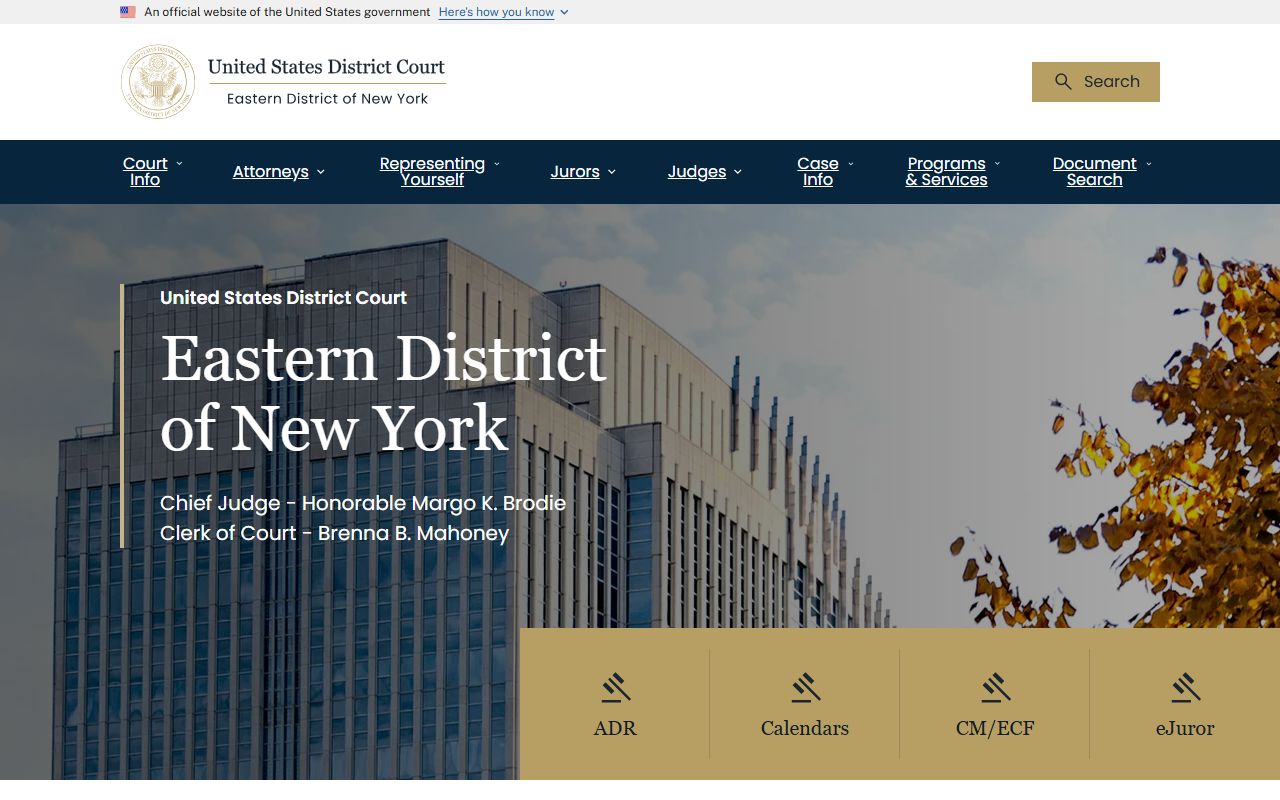
The EDNY federal courthouse in Brooklyn is the Theodore Roosevelt United States Courthouse at 225 Cadman Plaza East. It is just a short walk from the state court cluster. Bankruptcy matters for Kings County go to the U.S. Bankruptcy Court for the Eastern District of New York, which also covers Queens, Richmond, Nassau, and Suffolk Counties.
Federal appeals from the EDNY climb to the U.S. Court of Appeals for the Second Circuit. The Second Circuit sits at the Thurgood Marshall U.S. Courthouse at 40 Foley Square in Manhattan. Its official site, pictured below, explains how the federal appeals court works for the region that includes Brooklyn.
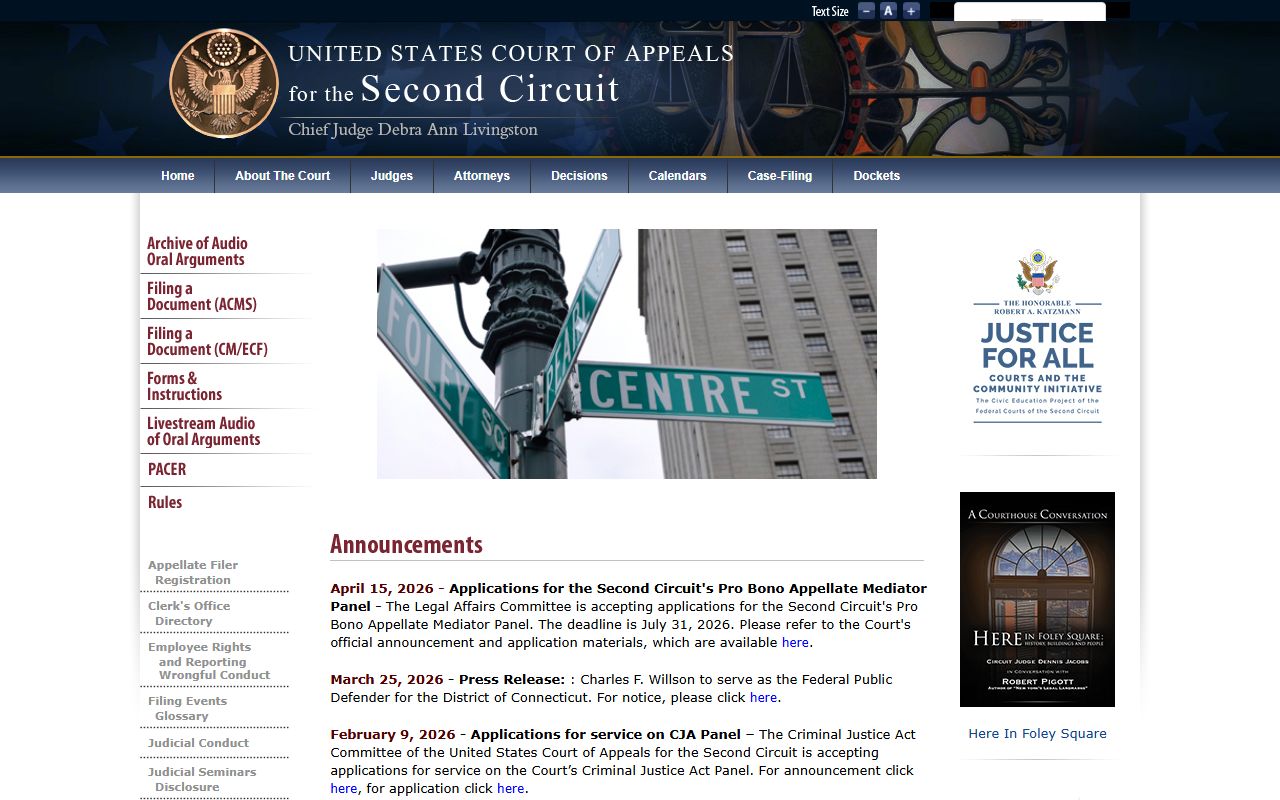
The Second Circuit handles appeals from the federal trial court, not from the state Supreme Court. The two systems run on parallel tracks. A state case stays in state court, and a federal case stays in federal court, with rare exceptions.
Federal case records do not appear on the state portals. They live in PACER, the federal records system. The PACER portal requires an account, and fees may apply under the current federal fee schedule. The screen below shows the PACER entry point used to find federal Kings County filings.
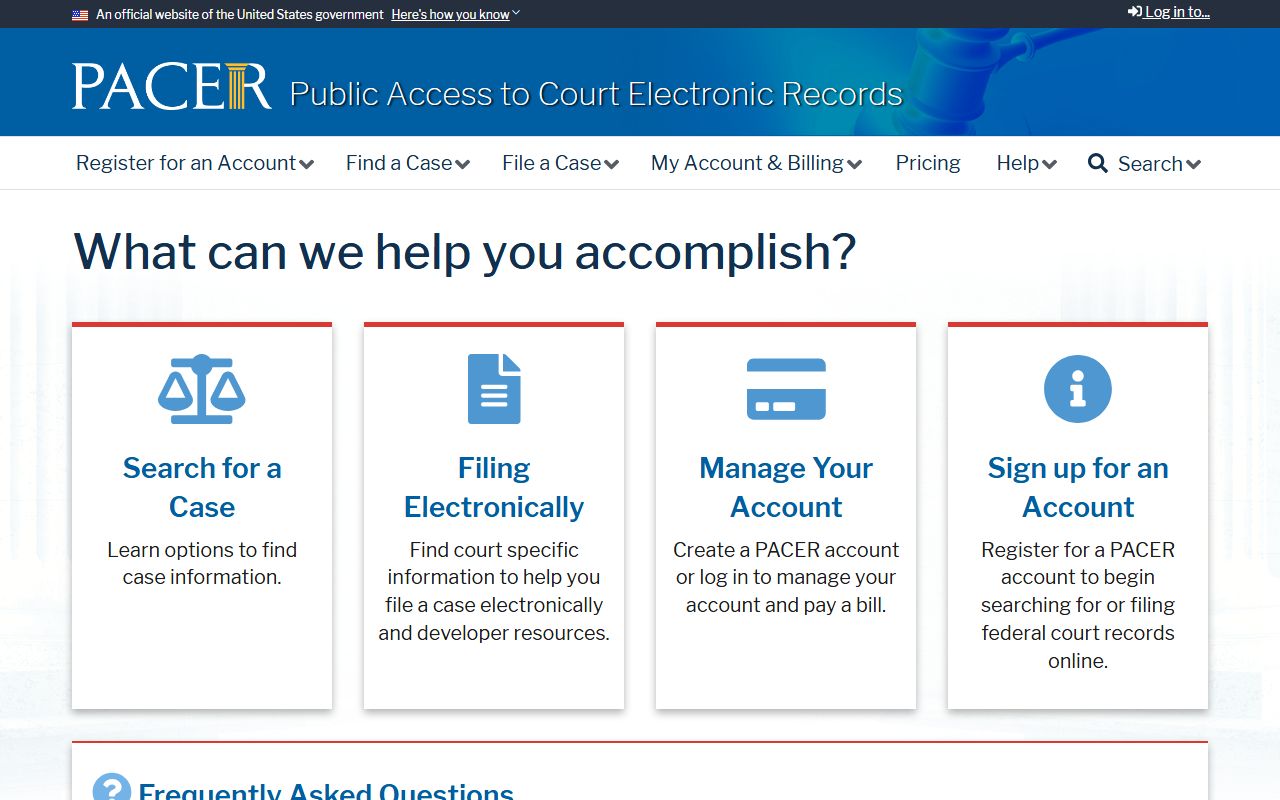
Use PACER for federal District Court and federal appeals records. For state Supreme Court records, stick with the free New York court portals instead.